



The intact 400,000-acre Lungba Samba Landscape, including Thudam, is a locally designated Biocultural Heritage and Ecotourism Special Conservation Zone. Yet, hydropower companies are aggressively pushing destructive roads through unethical ways, as exposed by Mongabay on August 12, 2024 and December 12, 2025. There are verified community claims of forged signatures in public hearings, a fabricated Environmental Impact Assessment, inadequate consultations, major inconsistencies, and illegal activities, including logging, wildlife hunting, and bushmeat consumption in nearby areas.
In response, through support from the Quick Response Fund for Nature (QRFN), the Indigenous-led land acquisition project—carried out by the Lungba Samba community—secured 3.8 hectares of sensitive titled land in Thudam. This area is the highest permanent yak-herding settlement in eastern Nepal, located at 3,700 m. The acquired parcel is strategically at the confluence where the Medokchheje River (part of the Chhujung river system) meets the Syangjing River (locally known as Dudh Khola), ultimately feeding into the sacred Chhujung River, a vital tributary threatened by the proposed hydropower project. This parcel creates a choke point in the Lungba Samba landscape, bordered by Makalu Barun National Park and Kanchenjunga Conservation Area. It blocks key access for roads and dams that would fragment habitats, disrupt ecosystems, and displace communities.
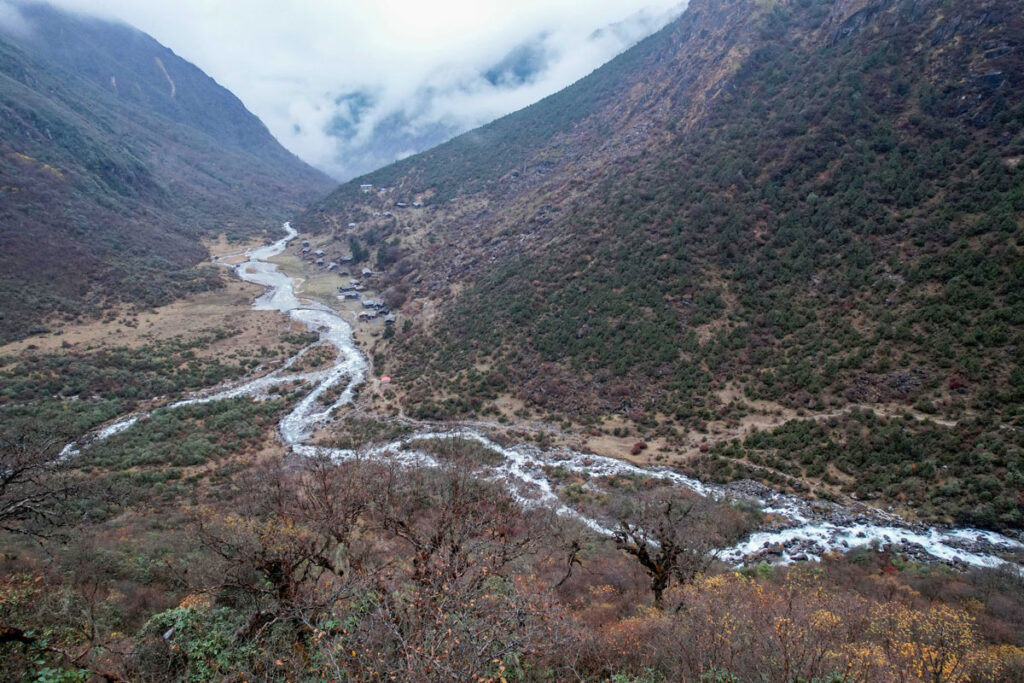
QRFN’s grant enabled the Lungba Samba community to secure a strategic 3.8-ha site located at the confluence of the Medokchheje and Syangjing Rivers. Photo credit: Lungba Samba community.
The acquisition protects globally threatened hyper-endemic medicinal plants, including critically endangered Indian nard (Nardostachys jatamansi), endangered Ativisha (Aconitum heterophyllum), endangered Salampanja (Dactylorhiza hatagirea), vulnerable love apple (Paris polyphylla), and endangered East Himalayan yew (Taxus wallichiana). It also safeguards high-Himalayan wildlife such as snow leopards, blue sheep, red pandas, and restricted-range insects and fish.
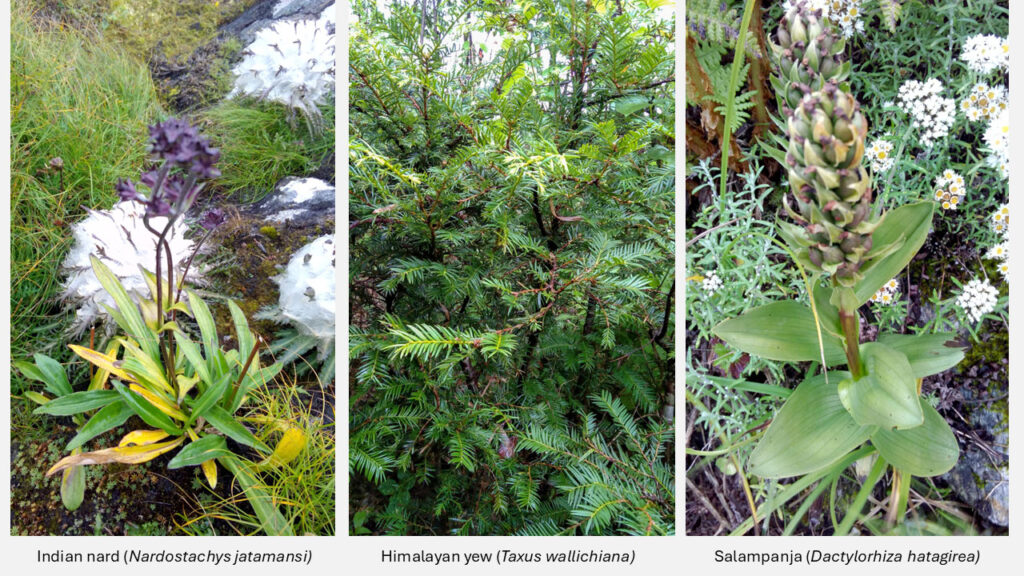
The site protects endemic and globally threatened plants, including Indian nard (Critically Endangered), Himalyan yew (Endangered), and Salampanja (Endangered). Photo credit: Lungba Samba community.
The overarching goal was to purchase sensitive titled parcels from individual owners and transfer them to the local learning grounds and welfare societies to immediately block encroachment by three hydropower companies. Securing these parcels has strengthened community defense against the displacement of nomadic communities, the disruption of sacred pastures, and damage to fragile glacial ecosystems. The Quick Response Fund for Nature’s $28,000 grant proved crucial—providing rapid, timely support to enable the purchase before escalating land prices or competitive bids from hydropower interests could interfere. QRFN also helped the Lungba Samba community raise additional funding from OtterFonds to complete the acquisition.
The project is deeply integrated with local Bhote-Lhomi Singsa Indigenous communities in Thudam (approximately 22 households), Chyamtang, and Ridak, who live on and near the land, sustaining livelihoods through transhumant yak herding, medicinal herb cultivation, and sacred rituals. The acquired 3.8-hectare parcels will sustain livelihood (> 40%) to sustainably generate income from non-timber forest products (NTFPs) such as medicinal and aromatic plants (MAPs) and continue to safeguard globally threatened high-Himalayan medicinal plants and wildlife from destructive infrastructure, preserving biocultural heritage for future generations.